Should I Seal My Travertine or Tile and Grout Shower
Sealing your showers can be tricky and while some need it yearly, some don't and we will help you and your decision
What are the benefits of sealing my stone tile shower? Sealing your showers can be tricky, and while some need it yearly, some don't, and we will help you with your decision
Understanding the Porous Nature of Natural Stone Tiles
Natural stone tiles such as travertine, slate tile, and other porous stones are prized for their natural beauty and unique appearance. However, their porous nature means they can easily absorb liquids, moisture, and other contaminants if left unprotected.
Because natural stone surfaces are constantly exposed to water, soaps, shampoos, and minerals—especially in showers and bathtub surround installations—properly sealing them is essential to protect the stone and grout from long-term moisture damage and bacteria growth.
Benefits of Sealing My Stone Tile Shower
The benefits of sealing my stone tile shower include protecting natural stone tiles and grout from absorbing water, stains, and other contaminants. Proper sealing creates a protective barrier that improves water resistance, allowing water to bead on the surface instead of soaking in.
This helps reduce mold and mildew growth, prevents moisture damage, and preserves the natural beauty and natural look of the stone. Sealing also helps extend the life of porous stone surfaces while keeping the shower cleaner and easier to maintain.
Why Should I Seal My Stone or Tile Shower?
Natural Stone and Tile showers are becoming more and more popular because they are a beautiful upgrade to master bathrooms or guest bedrooms.
They make the bath more appealing than the standard fiberglass cases. The most popular shower products are travertine tiles and ceramic or porcelain tiles. These are the three we see in many showers that we clean and seal regularly.
Durability of Tile and the Role of Grout
All these types of tiles are great for showers. They are durable, and if maintained properly, they are easy to take care of regularly.
One thing people don't always think about is that even though they have these durable, beautiful tiles in their shower, they still have grout. Grout is very absorbent and stains easily. Let's talk a little bit about why sealing your shower is essential.
What Happens When a Shower Is Not Sealed
Once you start to use your beautiful shower, you may notice darker spots in the grout or even on the stone(this does not occur with ceramic or porcelain). This means the shower was not sealed.
Sealing helps prevent the water from absorbing into the grout and stone and prevents staining. When a shower is sealed correctly, this allows the shower to stay looking new longer, prevents water, shampoo, conditioner, etc. absorption, can prevent mold and keeps your shower more sanitary.
How Sealer Works
Now you may be wondering how can sealing help with all of this. When a sealer is applied correctly, it absorbs into the stone and grout and clogs the pores, acting as a barrier and blocking these different things from growing.
Instead of hitting the grout and soaking in the water, shampoo, conditioner, etc. the sealed grout and stone will bead up the water and products and not absorb it all into the stone and grout.
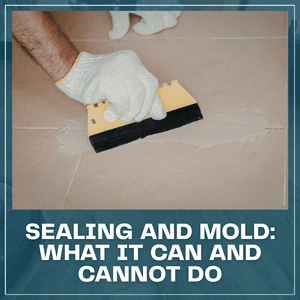
Sealing and Mold: What It Can and Cannot Do
When it comes to mold, the sealer can't block the mold from growing from underneath, but it will prevent mold growing on top of the shower tile surfaces.
We cannot prevent mold from growing behind the stone and grout because that would be a plumbing break or some sort of a leak behind the wall that is increasing the mold, causing it to grow through the grout and stone.
This is not something sealers can prevent. Sealers can stop water and products from seep into the stone and grout, not from behind it. I just wanted to make that clear, so there is no confusion. We often get this question, and it is a valid concern that would need the proper attention from a licensed plumber.
Hard Water Concerns in Arizona
You may be thinking well, this is great, but what about the fact that Arizona has such hard water even when you have a water softener system sometimes.
This is another great topic. Yes, Arizona has very hard water, and when you shower every day, the white build-up could occur. Part of sealing your shower helps prevent that hard water(calcium) build-up from staining the grout between professional cleanings.
Sealing will not prevent the build-up from happening on the future staining that can occur from the build-up.
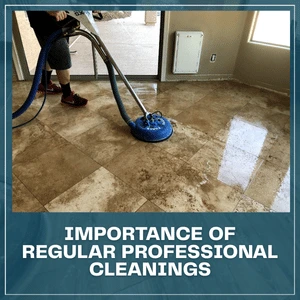
Importance of Regular Professional Cleanings
Regular shower professional cleanings are vital!! Our high-pressure machines can blast the build-up out of the grout lines and off the stone or tile surface.
When you have professional cleanings done regularly, the sealer will last longer, we can touch up the sealer, and your shower will stay looking new longer.
We recommend cleaning your shower once every 12-18 months by a professional company; if you can do it more often, that is even better for the shower tiles.
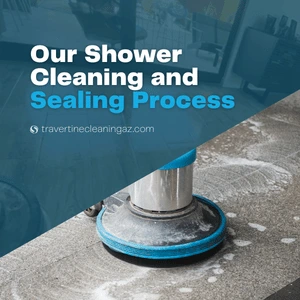
Our Shower Cleaning and Sealing Process
Our process for sealing a shower may sound simple, but as you can see, it does wonders for your shower. When we are there, we first assess what your shower needs.
There may be many different things that the technicians recommend depending on what your shower specifically needs. I can bet you anything our technicians will almost always recommend cleaning and sealing for sure every time.
Once we are given the OK to clean and seal the shower (price has been gone over, expectations, etc.), we spray them with our shower cleaner, let it dwell for about 5-7 minutes, agitating spots we saw that seemed more stained than others.
Then we use our shower tool that is attached to our truck-mounted system. The shower tool is handheld and uses 220-degree water at 1200 PSI. It acts like a self-contained pressure washer and extraction system.
It blasts the build-up and grime out of the grout and off of the surface, leaving your shower looking beautiful. Then we apply one of our sealers.
Types of Sealers We Use
We have a few different options when it comes to the sealers we use. All of our sealers are penetrating sealers, not topicals. We have proven that the penetrating sealers do an all-around better job and stay looking nice longer.
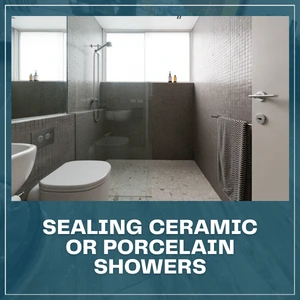
Sealing Ceramic or Porcelain Showers
For ceramic or porcelain showers, we can use a clear sealer that is a hybrid solvent sealer or a color seal. Both are applied by hand grout line by grout line.
The Hybrid Solvent sealer is a clear seal and will not change the look at all but will help prevent future staining within the grout lines. The color seal is a water-based sealer that has a color pigment mixed into it.
This sealer will change your grout lines to one uniform color. A color seal is excellent to use if you all ready have a lot of staining throughout your grout lines.
Ceramic and Porcelain tiles do not need to be sealed because they are human-made and not porous at all. Truthfully, ceramic or porcelain tiles are the best tiles to put n your shower if appropriately installed and maintained correctly.
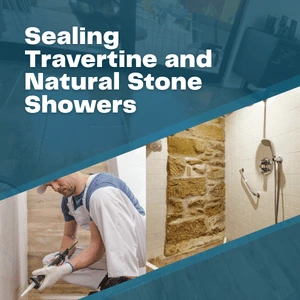
Sealing Travertine and Natural Stone Showers
When it comes to Travertine or other natural stone showers, we use a stone sealer. There are a couple again that we can use a hybrid solvent or an enhancer; both are applied by hand.
Similarly, the hybrid solvent is a clear sealer that absorbs into the stone and the grout. The difference between stone tiles and ceramic/porcelain is you do need to seal the stone surfaces and the grout.
Stone being a natural product can stain; just be aware of this. Our enhancer sealer is not used as often but can be used in showers. This sealer will bring out all the colors within the shower stone, and it leaves the shower with a wet look.
Typically, we use this on the rock pebble floors of a shower, but you can use it on the walls. It is also a clear sealer that absorbs into the stone, bringing out the colors within the stones.
Should I seal my stone shower floor?
Yes, you definitely should. Natural stone is naturally porous, meaning it will drink up water, oils, and soap scum if left unprotected. Applying a sealer creates a vital moisture barrier that keeps these liquids on the surface, preventing deep stains and structural damage.
How to Tell If Your Shower Needs to Be Re-Sealed
A simple water test can help determine if your shower needs to be re seal(ed). Sprinkle a few drops of water onto the stone or grout:
If the water beads, the sealer is still working
If the water darkens the stone or grout, it’s time to re seal
How much traffic the shower receives, the installation process, and daily use all affect how long a sealer lasts.
Proper Sealing vs. Topical Sealers
Not all sealers are the same. Penetrating sealers absorb into porous stones and grout, forming a long-lasting protective barrier beneath the surface. Topical sealers, on the other hand, sit on top of the surface and can wear unevenly, peel, or reduce slip resistance.
For showers and other wet areas with constant exposure, penetrating sealers provide better water resistance while preserving the stone’s natural beauty and sure footing.
How Often Should Natural Stone Be Re-Sealed?
How often you should re seal depends on:
The porous nature of the stone
How much traffic the area receives
The quality of the original installation process
Daily exposure to water and products
Regular professional cleanings help preserve the sealer, ensure proper sealing, and keep stone surfaces looking their best for years.
What happens if you don't seal stone tile?
Without a sealer, the stone will absorb moisture, which often leads to the growth of mold and mildew inside the tile itself. You may also see “efflorescence," a white powdery salt buildup, or permanent staining from body oils and shampoos. Over time, this constant water absorption can cause the stone to weaken, flake, or discolor.
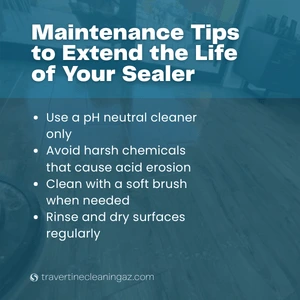
Maintenance Tips to Extend the Life of Your Sealer
Between professional cleanings, proper maintenance helps extend the life of your sealer:
Use a pH neutral cleaner only
Avoid harsh chemicals that cause acid erosion
Clean with a soft brush when needed
Rinse and dry surfaces regularly
Using the wrong cleaners can break down sealers prematurely and allow stone and grout to absorb liquids again.
Should you seal tile in a shower?
It depends entirely on the material: natural stones like marble or slate must be sealed, while glazed ceramic and porcelain tiles generally do not.
However, even if your tiles are porcelain, the grout lines between them are usually porous and should be sealed to prevent staining. Essentially, if your shower features any natural material or cement-based grout, sealing is a necessary step.
Learn More or Contact Us
As you can see, there are many great reasons for sealing your shower and even more options. For more information, check out our website www.travertinecleaningaz.com or call our office at 480-352-2987.
Industry: Natural Stone, Tile and Grout Cleaning and Restoration
Cody has been in the Natural Stone, Tile and Grout service for 27 years, his knowledge and experience in this field helps get your job done correct the first time. If there is anyone you want on your job site it's Cody.