Travertine Polishing and Honing and How They are Professionally Done
Travertine Tile is a beautiful flooring and can last a lifetime but it does need to be polished or honed to achieve its potential. We will go over the different travertine tile finishes from satin to high shine.
Travertine is a versatile natural stone whose appearance and durability depend heavily on its finish. Choosing the right one involves balancing aesthetic goals (rustic vs. luxury) with practical needs (slip resistance vs. ease of cleaning)
Types of Travertine Polishing and Honing Finishes
Travertine is a timeless natural stone, and the finish you choose plays a major role in its appearance, durability, and maintenance needs. Understanding the different types of travertine polishing and honing finishes helps homeowners and designers select the right surface for both aesthetic appeal and practical performance.
From high-gloss polished surfaces to soft, matte honed textures, each finish offers unique benefits depending on the space, traffic level, and desired look.
The Different Types of Travertine Tile
Travertine tile floors are absolutely beautiful. There are many different looks travertine can have, depending on personal preference. There are a few main types of travertine, such as tumbled and polished, each producing different sheens and visual effects.
Tumbled Travertine
Tumbled travertine offers a more natural, almost rustic appearance. This style is created by tumbling travertine pieces with abrasive materials in a large water barrel.
The tiles typically appear rougher on the edges (they are not actually rough, but they are not straight-edged). Because of this process, it is difficult to achieve a high-gloss shine on tumbled travertine.
Tumbled Travertine:
Surface Type: Textured surface with slightly uneven feel
Slip Resistance: Excellent - ideal for wet areas
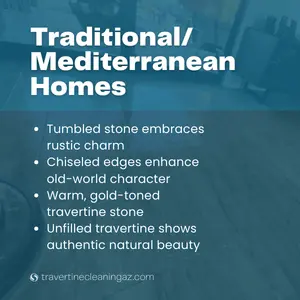
Rustic Charm: Maximum - perfect for Mediterranean and traditional styles
Maintenance Level: Low - weathered look hides wear and tear
Best For: Pool decks, outdoor patios, shower floors, entryways
Processing: Created in rubber-coated barrels with abrasive materials and water
Honed & Polished Travertine
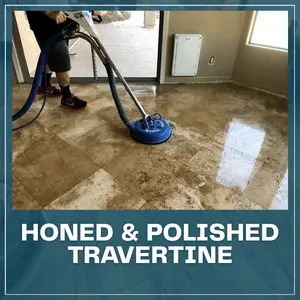
Honed or polished travertine tiles are treated by grinding the surface down to one smooth finish, with all tiles having the same thickness. With these tiles, you can achieve matte, satin, semi-gloss, and high-gloss sheens.
Depending on the grade of travertine, honed and polished tiles may require filling. The higher the travertine grade, the fewer fills are needed and the higher the shine that can be achieved.
Honed Travertine:
Surface Type: Smooth surface with matte to low-sheen finish
Slip Resistance: Good - suitable for most residential applications
Natural Texture: Preserved while maintaining uniform smoothness
Maintenance Level: Low to moderate - hides scratches better than polished
Versatility: Excellent for both floors and countertops
Best For: High-traffic areas, kitchens, hallways, commercial lobbies
Timeless Elegance: Understated sophistication without the shine
Polished Travertine:
Surface Type: Glossy surface with mirror-like reflection
Slip Resistance: Low - requires caution in wet areas
Natural Beauty Display: Highlights intricate patterns and veining
Maintenance Level: Moderate to high - shows scratches and etching easily
Shiny Surface Achievement: Requires high-grade travertine and professional polishing with diamond pads
Best For: Wall cladding, fireplace surrounds, low-traffic decorative areas
Luxurious Appearance: Maximum - creates that high-end, polished stone aesthetic
While your existing content covers the essential sheens and types, let's dive deeper into the specific travertine finishes available and what makes each unique for different applications.
Brushed Finish: The Perfect Middle Ground
The brushed finish is achieved by using wire brushes or abrasive pads on the travertine’s surface, creating a textured finish that sits beautifully between honed and tumbled stone.
This process brings out the natural texture of the travertine while maintaining a relatively smooth surface that's practical for daily use.
Key Characteristics:
Provides excellent slip resistance without the roughness of tumbled finishes
Enhances the stone's natural charm while keeping it suitable for high-traffic areas
Works exceptionally well in both residential and commercial spaces
Maintains the natural beauty without the high maintenance of a polished surface
The brushed finish is particularly popular for kitchen and bathroom countertops, where you want a luxurious appearance without worrying about fingerprints or water spots. The textured surface hides minor imperfections and wear patterns much better than a polished finish.
Surface Type: Slightly textured with visible brush marks
Slip Resistance: Very good - practical for most applications
Natural Stone Character: Enhanced without excessive roughness
Maintenance Level: Low - practical and forgiving
Visual Interest: Subtle texture adds depth without dominance
Best For: Commercial spaces, busy households, versatile applications
Filled Travertine vs. Unfilled: Making the Right Choice
One critical decision when selecting travertine finishes is whether to choose filled or unfilled travertine. This choice dramatically affects both the appearance and functionality of your stone.
Filled Travertine:
Natural pits and voids are filled with resin or cement-based materials
Creates a smoother surface, especially important for polished finishes
Easier to clean and maintain in wet areas
Necessary for achieving high-gloss sheens
Better for bathroom countertops and food preparation areas
The filled areas won't polish to the same sheen as the natural stone
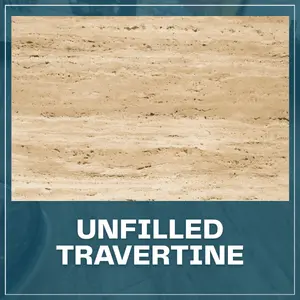
Unfilled Travertine:
Showcases the authentic, natural pits and character of the stone
Provides enhanced slip resistance for pool decks and outdoor areas
Maintains the aged appearance that many homeowners desire
Typically less expensive than filled options
Can be filled later during the grouting process if desired
Best for achieving true rustic charm in your space
Chiseled Edge Finish: Artisan Character
The chiseled edge finish features hand-cut or machine-cut edges that create an irregular, aged appearance around each tile’s perimeter. This finish can be applied to any surface finish (honed, polished, or tumbled) and adds significant visual interest and depth.
Benefits of Chiseled Edges:
Creates an old-world, artisan aesthetic
Hides minor installation imperfections at tile edges
Reduces the visible grout lines for a more seamless look
Particularly popular in Mediterranean and Tuscan-style homes
Works beautifully for accent walls and wall cladding applications
Best Applications for Each Travertine Finish
Kitchen Countertops
For kitchen countertops, the choice between honed and polished travertine depends on your lifestyle:
Honed Finish for Kitchens:
Hides etching from acidic foods (lemons, tomatoes, wine) better than polished
Provides a smooth surface for food preparation
Easier to maintain daily - doesn't show every fingerprint
Requires proper sealing to prevent staining
Perfect for busy family kitchens
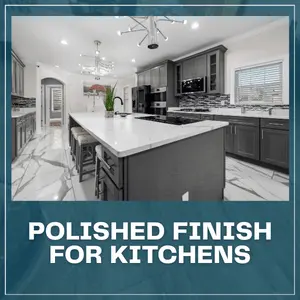
Polished Finish for Kitchens:
Creates a luxurious appearance in formal dining areas
Requires more careful maintenance and immediate cleanup of spills
Best for bar areas or less-used spaces
The glossy surface is easier to wipe clean when properly sealed
Bathrooms present unique challenges due to constant moisture exposure:
Best Choice: Honed or Brushed Finish
Provides slip resistance when properly sealed
The textured finish prevents water spots from showing prominently
Honed finish offers a smooth surface for vanity areas
Tumbled finishes work beautifully for shower walls and floors
All finishes require proper sealing to prevent water absorption due to the porous nature of travertine
In wet environments, the finish is only half the battle. You must also ensure the stone is properly protected; find out why sealing your travertine shower is the best way to prevent mold and water spots.
Pool Decks and Outdoor Spaces
For pool decks and outdoor applications, slip resistance is paramount:
Tumbled or Brushed Finishes Are Essential
Excellent slip resistance even when wet
The textured surface provides traction around water
Natural pits in unfilled travertine actually improve grip
The aged appearance suits outdoor environments perfectly
Requires sealing to protect against pool chemicals and weather
Outdoor travertine faces harsh Arizona elements. Similar to pavers, these surfaces need specialized care to keep them looking their best year-round.
Residential and Commercial Spaces: Floors and Walls
For High-Traffic Floors:
Honed travertine balances durability with elegance
Brushed finish provides character with practicality
Avoid highly polished finishes in commercial lobbies (safety concern)
For Wall Cladding and Accent Walls:
Polished finish creates a dramatic visual impact
Chiseled edges add artisan character
Tumbled stone brings rustic charm to feature walls
All finishes work well since slip resistance isn't a concern
For Luxurious Spaces:
Polished surface delivers maximum wow factor for entryways
Honed and polished travertine combination creates a sophisticated contrast
Large-format tiles with a polished finish maximize the luxurious appearance
The Different Sheens of Travertine
Now that we understand the types of travertine, let’s explore the different sheens.
Matte Finish
The first sheen is matte. This is a very natural-looking finish. There is no shine to the travertine tiles at all, but they are all of one uniform look. Think of painting a matte finish on the paint, which is simple and flat looking.
The beauty of the matte finish is that you achieve the authentic look of the natural stone. You typically find this sheen on travertine paver sand tumbled travertine. It gives you more of a rustic travertine look.
Satin Finish
Then you have a satin finish. This sheen is becoming more and more popular. The satin finish has the slightest reflection. Satin finishes are most popular on tumbled travertine.
When the light hits the travertine at certain angles, you can see the finish, but directly on top of it, the travertine looks like a matte finish. This gives a lot of depth and character to your travertine tiles.
Satin is excellent for those who do not like the reflection of semi and high gloss sheens. You can achieve this sheen on both tumbled and honed or polished travertine tiles.
Semi-Gloss Finish
Semi-gloss is another very popular sheen. This one has a gloss-like look, but it is not super highly reflective. We can achieve this sheen on tumbled, honed, or polished. This sheen gives a little more of a “high-end” feel to the travertine tiles(especially the honed or polished tiles).
It adds life to the smooth tiles. To get flat travertine tiles to a semi-gloss, we have to polish with powders that react with the calcium, bringing out the natural shine from within the stone. Travertine, being a natural stone, can have many looks.
High-Gloss Finish
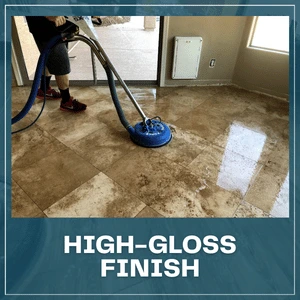
The last sheen we can accomplish through polishing is a high gloss shine. This is the highest sheen travertine can get to. When done correctly, the travertine tiles will look like a mirror.
The reflection of the windows, doorways, and lights is a perfect reflection. This sheen is a personal preference. Some people love the high gloss shine, and others do not like it at all.
The high gloss gives a real “high end” feel to travertine; it almost sparkles all the time. If this is a look you are going for, we highly suggest installing a higher grade travertine tile.
The higher the travertine grade, the higher the shine you can get, and the fewer holes you will have. The fill used on travertine does not polish, so if this is the sheen you are going for and you fill the holes, the holes will stay flat and be very noticeable.
Polished surfaces are prone to 'etching'—those dull spots caused by acidic spills. We’ve outlined exactly how to handle etching and staining to help keep your high-gloss floors looking like a mirror
Why Travertine Remains So Popular
Each type and sheen of travertine is beautiful in its own way. Travertine works with many home styles and, here in Arizona, remains extremely popular. When properly cleaned and sealed every 18–24 months, it is easy to maintain and lasts for decades.
Travertine may not be for everyone, but those who love it — and achieve the finish they want — tend to love it deeply and proudly show it off.
How to Tell If You Have Travertine
With the new types of ceramic and porcelain tiles that look like travertine, you may think you have travertine, but you do not. Here is how to tell if you have travertine:
Usually light to medium beige, sometimes yellow-beige; also available in gray tones
Tumbled travertine has a natural stone texture with uneven surfaces and wavy edges
Honed/polished travertine is smooth with possible visible pitting or holes
Prefilled holes will feel rougher than the tile surface
The tile color is consistent all the way through
Ceramic/porcelain tiles often have a reddish or grid-pattern backing
If you are purchasing a home and are unsure whether it has travertine, it most likely does not — because travertine is considered an upgrade and realtors usually highlight it in listings.
Why High-Grade Travertine Matters for Polishing
As mentioned in your existing content, the grade of travertine significantly impacts how high of a shine you can achieve. Higher-grade travertine has fewer natural pits and a denser structure, allowing for a more uniform polished surface.
Lower-grade travertine with extensive filling presents challenges because filled travertine areas (the resin or cement used to fill voids) don't polish to the same sheen as the natural stone.
When you attempt to create a high-gloss finish on heavily filled travertine, the filled areas remain dull while the natural stone around them becomes reflective.
This creates an uneven, spotted appearance that detracts from the luxurious appearance you're trying to achieve. For true mirror-like polishing, premium-grade travertine with minimal filling is essential.
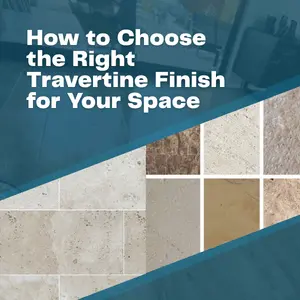
How to Choose the Right Travertine Finish for Your Space
Selecting between honed and polished travertine (and other finishes) requires considering multiple factors beyond just aesthetics.
Consider Your Lifestyle
High-Traffic Households:
Choose honed travertine or a brushed finish
Avoid polished finishes in main living areas
Unfilled travertine provides more slip resistance
The natural texture handles daily wear gracefully
Formal, Low-Traffic Areas:
Polished finish creates maximum luxury impact
Filled travertine ensures a smooth, consistent appearance
The glossy surface stays beautiful with minimal use
Perfect for guest bathrooms and formal dining spaces
Homes with Children and Pets:
Tumbled or brushed finishes hide inevitable scratches
Let the stone's appearance guide the overall design
Consider the Location
Wet Areas (Bathrooms, Pool Decks):
Prioritize slip resistance over aesthetics
Tumbled or brushed finishes are safest
Ensure proper sealing schedule maintenance
Textured surface prevents accidents
Dry Areas (Living Rooms, Bedrooms):
Any finish works from a safety perspective
Choose based on desired aesthetic
Polished surface acceptable in low-traffic areas
Consider maintenance commitment
Food Preparation Areas:
A honed finish is most practical for kitchen countertops
Smooth surface but not overly slippery
Easier to maintain than polished
Filled travertine reduces bacteria hiding spots
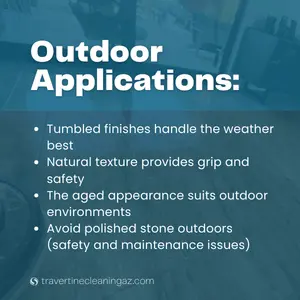
Outdoor Applications:
Tumbled finishes handle the weather best
Natural texture provides grip and safety
The aged appearance suits outdoor environments
Avoid polished stone outdoors (safety and maintenance issues)
Final Thoughts
Having travertine floors is like an upgrade, so Realtors will put in the description the fact that there are travertine floors throughout or something to that extent.
Travertine, as you may see, can be considered a higher-end tile for multiple reasons. You can achieve so many different looks; it is a natural stone, so the tiles never look identical, and travertine looks beautiful when taken care of correctly.
Frequently Asked Questions About Travertine Finishes
What’s the difference between honed and polished travertine?
Honed travertine features a smooth surface with a matte to satin finish and minimal shine, while polished travertine has a glossy surface with high reflectivity.
Honed finish provides better slip resistance and hides scratches more effectively, making it more practical for floors and high-traffic areas. Polished finish creates a more luxurious appearance but requires more maintenance and is best suited for walls and low-traffic spaces.
Can I change my travertine finish after installation?
Yes! This is one of the beautiful aspects of natural stone. Polished travertine can be honed down to a matte finish, and honed travertine can be polished to achieve a shiny surface.
However, this requires professional equipment and expertise. Tumbled stone has limited finish-change options due to its textured surface, though it can be enhanced or sealed differently.
Which travertine finish is best for kitchens?
Honed travertine is the best choice for kitchen countertops in most households. The smooth surface works well for food preparation, while the matte finish hides etching from acidic foods better than polished surfaces.
For formal kitchens with less cooking activity, a polished finish can work on countertops if you're committed to immediate spill cleanup and proper maintenance.
Can I use brushed finish travertine in showers?
Yes! Brushed finish provides an excellent balance for shower applications. The textured finish offers good slip resistance while maintaining a relatively smooth surface that's easy to clean.
It’s more practical than a polished finish and more refined than heavily tumbled stone. Just ensure proper sealing before and after grout installation.
What’s the best finish for bathroom countertops?
Honed travertine works best for most bathroom countertops. The smooth surface is practical for daily use, while the matte finish doesn't show water spots as readily as polished surfaces.
If you want more luxury in a powder room or guest bath, a polished finish can work beautifully since these areas get less use and moisture exposure.
Does filled travertine perform better than unfilled?
It depends on your application. Filled travertine provides a smoother surface, easier cleaning, and is necessary for achieving high-gloss polished finishes. It's better for bathroom countertops and food preparation areas.
Unfilled travertine offers better slip resistance, maintains more natural texture and rustic charm, and works better for pool decks and outdoor applications where grip is important.
Industry: Natural Stone, Tile and Grout Cleaning and Restoration
Cody has been in the Natural Stone, Tile and Grout service for 27 years, his knowledge and experience in this field helps get your job done correct the first time. If there is anyone you want on your job site it's Cody.