Choosing the right outdoor paver sealer is one of the most important decisions you can make for your Arizona patio, driveway, pool deck, or walkway.
The Valley’s extreme heat, intense UV rays, monsoon moisture, and hard water all accelerate surface wear on travertine, concrete pavers, brick pavers, and natural stone — and the wrong sealer, or no sealer at all, leaves those surfaces vulnerable to staining, efflorescence, weed growth, and long-term structural damage.
Outdoor entertaining areas are an essential part of our homes. The pavers we install create character and complete the space's overall look and feel.
So why not protect them from the harsh elements of the weather we get here in Arizona? From high heat temperatures to monsoons and even the rainy season. AriStone Cleaning and Restoration offers multiple services to keep your backyard spaces looking their best.
We highly suggest having your pavers cleaned yearly by a professional. The outdoor paver cleaning service we provide removes as much staining as possible from organic growth, plants, water, and so much more.
This guide covers everything you need to know to choose, apply, and maintain the best paver sealer for your specific surface and Arizona's climate.
Key Takeaways
Outdoor paver sealers protect driveways, patios, pool decks, and walkways from water damage, stains, UV fading, and freeze-thaw cycles that cause cracking and spalling
The main choice comes down to penetrating sealers for a natural look with minimal maintenance versus acrylic sealers for enhanced color, wet look finishes, and gloss
Film-forming sealers typically need resealing every 2-3 years, while penetrating products can last 5-7 years, depending on climate and traffic levels
Proper preparation—thorough cleaning, complete drying, and checking weather conditions—matters more than the specific brand you choose for achieving long-term protection
Most paver sealers last between 2 and 3 years, depending on foot or vehicle traffic, climate conditions, and product quality
What Is an Outdoor Paver Sealer (and Why It Matters in 2026)?
An outdoor paver sealer is a protective treatment for concrete, brick, clay, and natural stone pavers used on patios, walkways, driveways, and pool decks.
Sealing outdoor patio pavers provides a protective barrier against environmental damage and enhances visual appeal—helping your hardscape look beautiful while extending its functional lifespan.
Sealers work through two primary mechanisms. Penetrating sealers (based on silane or siloxane chemistry) soak into the porous paver surface, forming hydrophobic bonds that repel water from within.
Film-forming sealers (acrylics and urethanes) create a protective surface film on the paver, enhancing gloss, deepening color, and providing stain protection.
In a typical North American or European climate in 2026, unsealed pavers face serious threats:
Oil and rust stains from vehicles and outdoor furniture
De-icing salts are causing efflorescence and surface degradation
UV fading at rates of 15-25% color loss annually in sunny regions
Mold and mildew growth in shaded, damp areas
Freeze-thaw cycles, where water absorption leads to cracking and spalling
Weather resistance protects against fading from UV rays and damage from freeze-thaw cycles, which can cause unsealed pavers to crack or erode. Sealers also help lock in joint sand between pavers, reducing weed growth and ant tunnels—a common headache for patio and driveway owners.
Modern low-VOC, water-based paver sealer formulations have improved dramatically, making paver sealing safer and more environmentally friendly than the high-solvent products of previous decades.
Key Fact from Cody
In Arizona’s climate, most quality sealers applied professionally last 2–3 years before reapplication is needed. DIY applications using a pump sprayer or paint roller without proper surface preparation often last significantly less — sometimes under 12 months — because contaminants left in the paver surface prevent optimal penetration and adhesion.
Types of Outdoor Paver Sealers
No single sealer is the best paver sealer for every project. The right choice depends on your paver material and finish, appearance goals, climate exposure, and how much maintenance you’re willing to perform over time.
Penetrating Silane/Siloxane Sealers
These invisible, non-film-forming products soak into concrete or brick surfaces, repelling water and salt without changing texture or appearance.
Penetrating sealers are designed to protect pavers from within, providing long-lasting protection without altering their natural appearance, making them ideal for driveways, patios, and walkways. They offer excellent freeze-thaw resistance by reducing water absorption by 85-95%.
Water-Based Acrylic Sealers
Water-based paver sealers are becoming more common due to low VOC regulations, offering easier application and better joint stabilization, but they may not provide as deep a color enhancement as solvent-based options.
They dry clear, offer a low to medium gloss, and comply with stricter regulations in California, the Northeast, and much of the EU. In a wet or humid climate, water-based sealers are often preferred for their breathability and lower odor.
Solvent-Based Acrylic Sealers
Solvent-based acrylic sealers are popular for enhancing color and providing a glossy finish, but they typically offer shorter-term protection compared to penetrating sealers.
They contain higher solids (25-30%), produce richer color enhancement, and deliver that coveted wet look. However, they emit 350-450 g/L of VOCs and pose a greater risk of whitening if misapplied in humid conditions.
Epoxy-modified or urethane-enhanced sealers offer improved chemical and abrasion resistance for high-traffic driveways and commercial sites. Solvent-based or polyurethane sealers typically offer superior durability against abrasion in high-traffic areas while still allowing some breathability.
Concrete pavers are highly versatile; both topical acrylic and penetrating sealers work well for them. Natural stone, such as slate and travertine, is best suited for breathable, penetrating sealers to avoid moisture entrapment that causes white hazing.
Film-forming sealers change slip-resistance and appearance, while penetrating sealers maintain a natural matte finish and leave texture largely unchanged.
Why Seal Your Pavers?
But the thing that helps pave the most is getting them sealed. We have multiple options for sealers, and we offer a natural look, wet look(concrete and brick), and enhanced look (travertine). There are a few differences between the sealers, but the overall protection is of real importance for your pavers' lifespan.
Option 1: The Natural Look Sealer
When applied, our natural look sealers absorb into the paver concrete, brick, or travertine, which will prevent substances from absorbing into the stones, causing staining and discoloration.
When the sealer is applied, water will pool on top before starting to seep into the pavers. The sealer will also make the pavers easier to hose down in between cleanings. Once this sealer cures, the pavers will look how they do when they are completely dry. Leaving your backyard looks fresh and clean with the natural stone look.
Option 2: The Enhancer Sealer (Travertine)
For travertine, we offer an enhancer sealer. This sealer is also a penetrating sealer that absorbs into the travertine, clogs the pores, and helps prevent staining and discoloration. The difference with this sealer for travertine is that when the sealer cures, the pavers will look more vibrant and colorful.
This sealer enhances the color tones within the travertine to give a wet look, but it will not be glossy. The vibrancy of the pavers provides the yard with a unique and rich look.
This look is not for everyone, but when you have travertine pavers with a lot of movement throughout them, these sealers create a beautiful feel.
For concrete and brick pavers, we also offer a wet look sealer. Again, this sealer absorbs into the concrete or brick and clogs the pores, helping prevent staining and discoloration, leaving the pavers looking like they do when you hose them down.
This sealer is ideal for hiding imperfections within older concrete or bricks. It brings out the deep color tones and helps mask staining that has already occurred.
This sealer also has a matte finish but brings out the colors in concrete and brick. This sealer is also excellent for hiding imperfections within the concrete or bricks and helps hide staining that has seeped too far into the stones. The wet look sealer is ideal for homeowners who want a little more color for their backyard pavers.
Important Warning — Topical Sealers Outdoors
Never apply a gloss finish or wet look topical sealer on a pool deck, outdoor steps, or any walking surface that gets wet without confirming the product is rated non-slip.
A glossy finish sealer on a wet surface becomes extremely slippery — creating a serious safety hazard. Always choose a penetrating sealer or a non-slip rated topical product for pool decks and outdoor walkways.
Types of Outdoor Paver Sealers
Use this table to quickly identify the best sealer for your specific surface and goals. The right outdoor paver sealer for your home depends on the paver material, the look you want, and how the surface is used.
Penetrating Sealer
Best For: Travertine, limestone, natural stone, sandstone
When to Use: Patios, walkways, and pool deck with concrete or clay pavers
Wet Look / Topical Sealer
Best For: Concrete surfaces, brick pavers, concrete pavers (non-pool)
Finish / Look: High gloss finish / wet look
Durability in AZ: 1–2 years (UV breakdown)
Slip-Safe?: Only if non-slip rated
When to Use: Driveways, non-wet decorative patios; avoid pool decks
Solvent Based Sealer
Best For: Dense concrete surfaces, high-traffic driveways
Finish / Look: Gloss or wet look; intense color enhancement
Durability in AZ: 2–4 years
Slip-Safe?: Only if non-slip rated
When to Use: High-traffic driveways; requires ventilation due to strong odor
Water Based Sealer
Best For: Most pavers; safer around pools and landscaping
Finish / Look: Natural look to low gloss; depends on product
Durability in AZ: 2–3 years
Slip-Safe?: Yes (most formulations)
When to Use: Residential patios, walkways, pool areas; low odor, eco-friendly option
Don’t Gamble with Arizona’s Intense Sun. Get Professional Protection
DIY sealing often fails within 12 months because Arizona's extreme UV rays and monsoon moisture require more than a "big-box" store solution. At AriStone Cleaning and Restoration, we bring 27 years of local expertise to ensure your investment is protected with professional-grade precision.
How we take the guesswork out of your project:
Deep Pre-Sealer Cleaning: We use professional pressure washing to remove efflorescence, mold, and stains that DIY methods miss—preventing you from "locking in" dirt forever.
Surface-Specific Formulas: Whether it’s Travertine, Concrete, or Brick, we match the exact penetrating sealer needed to prevent peeling, hazing, or slippery surfaces.
Arizona-Tough Results: Our sealers are specifically selected for USDA Zone 9b/10a conditions, ensuring protection that actually stands up to 115°F heat.
Talk to our experts now about how we can seal your outdoor pavers the right way.
Performance and Expectations
All of our sealers are a matte finish and do not make the stones any slipperier or change the texture. We only use penetrating sealers, not topicals, to achieve the different looks because penetrating sealers absorb into and do not sit on the top of the pavers (over time, topicals will break down and flake).
The sealers, per their manufacturers, state they should last 2-3 years. We have seen them last longer, but we have also seen them last shorter than that time frame.
Arizona’s weather is impossible to predict, and as we all know, we have some crazy monsoon seasons, some not-so-crazy monsoon seasons, and excessive heat waves. All of these factors impact the life of your pavers and the sealers.
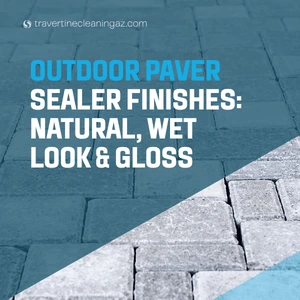
“Finish” refers to both the sheen level and the color change after sealing. Understanding your options helps you achieve the natural beauty you’re looking for—or the dramatic enhancement you desire.
Natural Matte Finish
Nearly invisible protection where pavers bead water but look almost unchanged when dry. Ideal for modern, minimalist hardscapes or historic brick where authenticity matters. Penetrating sealers deliver this look with less than 5% color shift.
Wet Look (Without Shine)
These products darken and enrich color, so pavers look like they do after being misted with water, but remain low-sheen or matte. Often achieved with penetrating or hybrid sealers.
Satin/Low-Gloss Finish
A subtle sheen (20-40 GU) popular for patios and pool decks in 2026. Offers light color enhancement without looking overly “plastic.”
High-Gloss Finish
Strong shine (70+ GU) plus deeper color, commonly sought on decorative concrete and showpiece driveways. However, high-gloss films can be more slippery when wet and show wear paths over time. Pool decks and slopes may need anti-slip additives to maintain safety.
Sealing connects aesthetics to long-term structural performance. A properly sealed paver patio or driveway delivers benefits that extend well beyond appearance.
Protection from Water and Freeze-Thaw Damage
Sealed pavers absorb less water—up to 90% reduction—which dramatically decreases cracking, spalling, and flaking in climates with winter freezing. Unsealed concrete can absorb 5-10% moisture, leading to 20-30% volume expansion during freeze cycles.
Stain and Chemical Resistance
Stain protection forms a barrier that repels oil, grease, food spills, and dirt, making cleaning easier. Sealed surfaces resist barbecue grease, leaf tannins, fertilizer stains, and de-icing salts commonly used on driveways.
UV and Color Fade Protection
Sealers' slow fading of paver colors, especially reds and browns, exposed to 2,000+ annual UV hours in regions like Arizona, Texas, or Southern Spain.
Expect 80-90% color preservation over 5 years versus 60% on unsealed surfaces. Essential for selling your home at a higher value by maintaining curb appeal.
Mold, Algae, and Efflorescence Reduction
Drier surfaces (under 10% moisture retention) are less hospitable to organic growth. Breathable sealers help reduce salt and mineral deposits that cause unsightly efflorescence.
Joint Sand Stabilization
Acrylic sealers harden joint sand in place, increasing compressive strength and reducing washout, weed growth, and ant activity by 70-90%. Sand joints remain stable even through heavy rain.
Ease of Cleaning
Sealed pavers shed dirt and spilled liquids more easily. Properly maintained concrete surfaces require pressure washing about 50% less frequently than unsealed pavers.
Arizona-Specific Factors That Affect Paver Sealer Performance
Arizona’s climate is genuinely different from the conditions for which most paver sealer products are formulated and tested, and those differences directly affect which products perform well and how long they last.
Here’s what every Arizona homeowner needs to account for when choosing and applying an outdoor paver sealer.
UV Rays and Extreme Heat
Phoenix and Scottsdale receive some of the highest UV radiation levels in the continental United States. UV rays are the primary cause of premature breakdown in film-forming acrylic sealers — they cause the gloss finish to chalk, yellow, and delaminate over time.
If you use a topical or wet look sealer in Arizona, select a product with explicit high-UV-resistance ratings, and plan for reapplication every 1–2 years rather than the 2–3 year timeline these products achieve in less sunny climates.
Penetrating sealers and water-based paver sealer formulations are generally more UV-stable because they do not create a surface film exposed to direct sunlight.
Monsoon Season and Moisture Intrusion
Arizona's monsoon season brings intense, concentrated rainfall that hits paver patios, driveways, walkways, and pool decks at high velocity. Unsealed pavers absorb this moisture rapidly, which accelerates efflorescence, mold growth in sand joints, and long-term structural degradation.
A penetrating sealer with water repellent protection is the most effective defense against monsoon moisture intrusion. The key is to ensure pavers are sealed before monsoon season — ideally in late spring — so the sealer is fully cured and provides maximum protection when the rains arrive.
Efflorescence in Arizona’s Hard Water Environment
Arizona’s hard water — already one of the hardest in the country — combines with monsoon moisture cycles to accelerate efflorescence on pavers significantly.
Efflorescence is the white, chalky mineral residue left behind when water moves through paver pores and evaporates on the surface, depositing calcium and other minerals.
To remove efflorescence before sealing, use a professional-grade efflorescence cleaner or diluted acid wash on concrete surfaces (never on natural stone), followed by a thorough pressure washer rinse.
Sealing after you remove efflorescence fully — not over it — is the only way to achieve long-term protection that doesn't lock mineral deposits beneath the surface.
How Much Does Outdoor Paver Sealing Cost in Arizona?
DIY sealing with a pump sprayer or paint roller and a retail sealer product costs significantly less in materials — typically $50–$150 for one to two gallons of sealer for a standard patio. But the results and durability rarely match those of a professionally applied job.
Professional application ensures proper surface preparation, correct sealer selection for your specific paver surface, even coverage on both the first coat and second coat, and the long-lasting protection that makes the investment worthwhile.
Ready to Protect Your Pavers the Right Way?
We clean, prep, and apply the right outdoor paver sealer for your specific surface — travertine, concrete, brick, or natural stone.
Sealers will help extend the longevity and overall appearance of your pavers, but we recommend yearly cleanings and sealer touch-ups to ensure the best possible protection. For more information, check out our website www.travertinecleaningaz.com
Whether you have travertine around a pool, concrete pavers on a driveway, or brick pavers on a patio, investing in the right outdoor paver sealer — applied correctly and on a properly prepared surface — is the single most impactful step you can take to protect, preserve, and extend the life of your outdoor surfaces in Arizona’s demanding climate.
Frequently Asked Questions
Will the sealer completely stop weeds and moss?
No, but it reduces growth by 70–90% by hardening the joint sand and limiting moisture. For maximum effectiveness, combine sealing with proper drainage and high-quality polymeric sand.
How long does paver sealer last in Arizona?
Professional sealers typically last 2–3 years. Penetrating sealers on stone or travertine last longer (~3 years) because they are protected from UV rays, while wet-look or gloss finishes degrade faster (1–2 years) due to intense sun exposure. Reseal when water stops beading or the finish appears dull and worn.
Can I apply a new sealer over an old one without stripping?
Yes, but only if the chemistry matches (e.g., water-based over water-based) and the old layer is clean and well-bonded. If the existing sealer is peeling, whitening, or unknown, a strip or test patch is required to ensure the new coat adheres properly.
How do I know when my pavers need to be resealed?
The most effective check is the water test: sprinkle water on the surface. If it beads, the seal is intact; if it absorbs immediately, you need to reseal.
Industry: Natural Stone, Tile and Grout Cleaning and Restoration
Cody has been in the Natural Stone, Tile and Grout service for 27 years, his knowledge and experience in this field helps get your job done correct the first time. If there is anyone you want on your job site it's Cody.