How To Clean Your Tile, Grout & Travertine Flooring
One of the biggest questions we get is, how do I clean this after you are done? Well today we will answer that question in detail on how we recommend you care for your tile, grout, and travertine tile flooring after a professional company has cleaned them
One of the biggest questions we get is, How do I clean this after you are done? Well, today we will answer that question in detail on how we recommend you care for your tile, grout, and travertine tile flooring after a professional cleaning company has cleaned them
How To Care For Your Tile Flooring After Your Professional Cleaning
Today, I would like to go over how to properly maintain your tile and grout or natural stones after a professional cleaning, sealing, or restoration. Maintaining your floors afterward is very important for the work's longevity, warranties (if provided), the longevity of your grout and stone, and many other reasons.
First, we spray the grout lines or the natural stone with the cleaner best suited for the work needed, alkaline or acid wash for tile and grout, and then our stone-safe cleaner for Travertine, Marble, Granite, and limestone.
Some of the natural stones require different cleaners. Once we have sprayed our cleaner down, we agitate the grout lines to loosen and break up what dirt and grime we can. Then we use our SX-15 to scrub, rinse, and extract all water and Chemicals.
Our SX-15 is attached to our truck mount; it works using 220-degree water at 1200 PSI, blasting the dirt and grime out of the grout and off the surfaces.
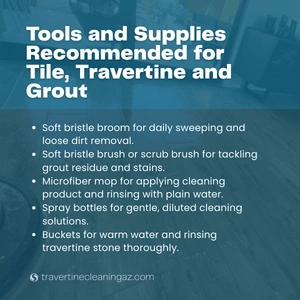
Tools and Supplies Recommended for Tile, Travertine and Grout
Using the right tools can make all the difference when you clean travertine tile or travertine floors. Here’s a list of essentials:
Soft bristle broom for daily sweeping and loose dirt removal.
Soft bristle brush or scrub brush for tackling grout residue and stains.
Microfiber mop for applying cleaning product and rinsing with plain water.
Spray bottles for gentle, diluted cleaning solutions.
Buckets for warm water and rinsing travertine stone thoroughly.
Avoid steel wool, abrasive pads, and harsh chemicals. Using acid-based cleaners or acidic solutions can damage the surface, especially if you have honed or polished travertine.
Sealing Grout and Stone After Professional Cleaning
Typically, after a professional cleaning, we recommend having us seal the grout line and stone surfaces (this service is up to you). Sealing helps prevent future staining.
The importance of sealing your natural stone cannot be overstated, as it helps prevent future staining. Grout has the properties of concrete and stains very easily; this is one reason why we highly suggest sealing the grout lines.
Does Sealer Prevent Grout From Getting Dirty?
One question we get asked often is Will the sealer help stop the grout from getting dirty.
The answer is yes, and no. It is not because we live in a desert; you will be walking on your tile and grout, and dirt will happen no matter what. It is yes because when this does happen, and if you follow our suggested maintenance cleaning process, your tile and grout should be cleaned up to where we got it.
After all, that sealer will be acting as a barrier and not allowing seeping in and staining. Without it, you may find yourself asking, "Why is my grout turning black?"
How To Clean Your Tile and Grout Between Professional Cleanings
Now on to what you have been waiting for. How to clean your tile and grout between professional tile and grout cleanings? We recommend using neutral or low PH cleaners.
We all love to use certain cleaners because they leave the house smelling fresh and clean, but these are bad for your tile and grout because they leave a film and attract dirt.
As this sits on the grout and keeps building up and building up, you start to cause staining within the grout lines.
Recommended Cleaner: Crystal Clean by Stone Pro
A product we love and have found great success with is a cleaner from Stone Pro called Crystal Clean.
You can buy it on Amazon (link will be attached below) as a pre-mix in the spray bottle or a concentrate that you mix yourself.
This product is super easy to use. Once it is mixed and in your spray bottle, you spray a section and then use a microfiber head mop to clean it.
It leaves no streaks and is virtually odorless. Crystal Clean also has some of the sealer compounds in it, so that helps the sealer last longer.
You can also add the recommended amount to a mop bucket or use a steam mop with no chemicals to clean.
There are other low pH cleaners out there as well. Crystal Clean is one we have tested and found to work ourselves, and we are very confident in recommending it to our customers.
By neutral or low PH, I mean 6.5-8.5% or lower. You can find this information in the product's tear sheets or easily online.
Using this product regularly will help keep your floors looking nice longer and help when we come back to clean them professionally. If you are curious about budgeting for your next visit, you can check out how much tile and grout cleaning services cost in Chandler.
Understanding pH and Stone Sensitivity
Travertine stone is a form of limestone, which makes it sensitive to acids. Using acidic cleaners or acid-based cleaners on travertine floors or travertine tile can dull the polished surface and leave etch marks.
Even small amounts of lemon juice, vinegar, or harsh bathroom cleaners can harm your stone.
To maintain your travertine tile, always choose a neutral PH cleaning product and rinse with clean water or plain water.
This preserves the natural beauty, prevents water spots, and protects the tile surface from long-term water damage. Proper pH care also reduces grout haze and keeps polished travertine looking shiny and new.
Handling Stubborn Stains on Travertine Floors
Even with careful maintenance, stains may appear on travertine floors. For greasy spots or tough grime, make a baking soda paste with warm water.
Apply the stain and gently work in using a soft-bristle brush or scrub brush, applying elbow grease as needed. Avoid acidic cleaners, which can etch the polished travertine.
After scrubbing, rinse thoroughly with clean water and dry completely. This method helps remove grime and grout residue while preserving the natural beauty of travertine stone.
Repeat as needed for persistent spots, always using slightly damp methods to prevent streaks or water spots.
Daily and Weekly Maintenance Tips
Maintaining travertine floors daily or weekly will protect the natural beauty of your travertine tile and prevent buildup of grout residue. Sweep or vacuum daily with a soft bristle broom to remove loose dirt.
For shower walls or bathroom areas, wipe down surfaces slightly damp with a microfiber cloth or mop using plain water or a gentle cleaning product.
Weekly, use a neutral cleaner diluted in warm water to mop the travertine tile. Avoid acidic cleaners or acid-based cleaners, which can etch the surface and dull the polished finish.
Rinse with clean water and allow the floors to dry completely. Proper care prevents water damage and preserves the natural beauty of travertine stone.
Yearly cleanings help keep the grout buildup from getting too bad, and they allow sealers to last longer.
About Our Sealer and Warranty
The sealer we apply is a hybrid solvent sealer. It absorbs into the grout lines and clogs the pores.
It also comes with a two-year warranty backed by us. The sealer is estimated to last 2-4 years.
We stress yearly cleanings because at that one-year mark, we can make sure the sealer is holding up and doing what it is supposed to. We can also check for areas we need to touch up, or that may be breaking down and starting to stain (which we would fix for free for the first two years).
Your warranty for the sealer is held intact when you use safe products for the tile and grout, and when you schedule regular maintenance cleanings.
Quick Tips for Bathroom and Shower Wall Care
Wipe shower walls slightly damp after each use to prevent mold, mildew, and water spots.
Avoid harsh chemicals on travertine stone to prevent etching.
Regularly clean grout residue and grout haze to maintain smooth, clean surfaces.
For daily cleaning, plain water or a neutral cleaning product applied with a soft-bristle brush or mop is sufficient.
Allow travertine tile and travertine floors to dry completely to prevent water damage.
How often should grout be cleaned on travertine floors?
Routine light cleaning should be done weekly or as dirty spots appear. A deeper cleaning is recommended every few months, especially in high-traffic areas. Seal grout annually or as recommended to protect from stains.
Do I need to seal travertine grout?
Yes. Sealing grout helps prevent staining and makes future cleaning easier. Re-seal when water stops beading on the surface or as recommended by the sealer manufacturer.
What should I avoid when cleaning travertine grout?
Avoid acidic cleaners (like vinegar or citrus), harsh detergents, and abrasive scrubbers. These can etch or dull the stone surface. Stick to pH-neutral stone cleaners and soft brushes.
What’s the best way to clean travertine tile grout?
Use a neutral- or low-pH cleaner designed for natural stone, spray it onto grout lines, then agitate with a soft brush and rinse with clean water. Avoid harsh or acidic cleaners that can damage both grout and travertine.
Our Philosophy and Experience
As always, all these options are 100% up to you. We recommend this process and cleaner because we have tested and proved the results ourselves, so we are confident in sending the information your way.
Besides offering top-quality work and customer service, one of our top priorities is to be a source for all to use when it comes to tile, grout, and natural stone.
We have been doing this professionally for 25 years, and we test all products we use and recommend in our homes first.
Industry: Natural Stone, Tile and Grout Cleaning and Restoration
Cody has been in the Natural Stone, Tile and Grout service for 27 years, his knowledge and experience in this field helps get your job done correct the first time. If there is anyone you want on your job site it's Cody.