Should I replace or restore my travertine, marble, or tile and grout
Flooring can become dirty and worn down but a lot of times you can restore these surfaces instead of replacing them.
AriStone Expert Answer
Is it better to restore or replace old tile and natural stone flooring?
Restoring tile and natural stone flooring is often more cost-effective than replacing it when the flooring is structurally sound. Professional cleaning, grout restoration, diamond honing, polishing, and minor repairs can correct many common problems, including embedded dirt, stains, scratches, etching, and dull finishes. Replacement may be necessary when tiles are severely damaged, widespread cracking occurs, or underlying moisture and structural problems compromise the installation. A professional evaluation can determine which option provides the best long-term value.
Expert guidance from AriStone Cleaning & Restoration • Over 27 years of professional natural stone cleaning and restoration experience.
If you are trying to decide whether to replace or restore your tile flooring, understanding the condition of your tile flooring, the type of tile damage, and whether repair vs replacement makes sense can save many homeowners significant money and stress.
Many issues — including damaged tiles, cracks, a small chip, or problems along the edges — can often be solved with professional tile repair, proper repair, or stabilization using epoxy instead of full replacement, which is often time-consuming and unnecessary in most cases.
Understanding repair vs replacement decisions early can prevent further damage, avoid a bigger problem, and protect the original tile in your room or space without starting a full home renovation or renovating project that becomes time consuming.
Replace or Restore Your Tile Flooring — What Most Homeowners Don’t Know
Before jumping into tile replacement or installing new tile or new tile floors, it is important to evaluate whether the damaged area is isolated or part of a bigger problem like failed expansion joints, substrate movement, or moisture intrusion causing further damage.
Surfaces exposed to high traffic areas, high traffic, or moisture — such as a bathroom, kitchen floor, or outdoor spaces — often show signs of deterioration faster, but that does not automatically mean replacement is required.
Many installations were originally designed to be water resistant, but over time grout deterioration, improper sealing, or cleaning practices prevent the surface from being able to dry completely, increasing risk for water damage and long-term deterioration of the original tile.
Understanding these factors helps avoid unnecessary demolition during a home renovation, protects surrounding materials like carpet, and prevents creating a larger space disruption in the room.
Five Surfaces we Can Restore for you instead of Replacing, and One We Recommend Restoring instead of Replacing.
There are many times you think the only way to get a surface looking good again is if you replace it. But this is not always the actual case. A lot of surfaces can be restored and brought back to life.
I will go over fine different surface materials that we can help you restore, and one that we recommend restoring instead of spending the money to replace it. Hopefully, this will help you save money when you are deciding between replacing and restoring.
The things we can help with include:
Tile and Grout
Tile and grout are one of the easiest materials to restore. Ceramic and porcelain tiles are very durable and last a long time. But even though they are very strong, they can get broken, chipped, scratched of the grout can become stained or discolored.
If you have loose or broken tiles, a handyman or tile installer can easily pop those out completely and reset the tile and replace the grout lines damaged.
We can help restore the surfaces and the grout lines. Often, the only reason a tile will look scratched is that it has a topical sealer on it. These are sealers installed on top of the tile's surface (like a wax).
To remove this wax sealer, we strip it off, which brings you back to the tile's natural look. Applying these topical sealers is a bad idea because they actually attract and hold dirt, and over time they can start to peel off and scratch easily.
Were commend staying away from using these. If the grout lines look discolored or stained, we can easily clean and reseal them to look new again.
We use a high heat high-pressure system to clean tile and grout. This system acts as a self-contained pressure washer with an extraction system as well. This is the best way to get the grout clean.
If there is still discoloring or stained areas after cleaning, we will apply what is called a color seal. This sealer is a penetrating sealer that absorbs the grout lines, clogs the pores, and changes the grout to one uniform color again. This process makes the tile and grout look brand new again.
As you can see, all these processes are more manageable and much more cost-effective than ripping out all of the tiles and replacing them with new tiles.
Not sure if your tile needs repair or full replacement? Call 480-352-2987 for an expert evaluation before you spend money on new flooring.
Many homeowners struggle with stubborn stains in the porous joints of their tile, which is why we share professional tile and grout cleaning secrets that surpass standard DIY attempts for a truly pristine look.
Travertine
This is a surface we restore regularly. There is a lot of different things that can happen to Travertine. It is a natural stone and even though it is a solid and durable material, it is still natural and can damage.
On Travertine you can get etch marks, scratches, staining, dulling, and so much more. Now instead of replacing the Travertine because you think there is no hope for it, give us a call first.
We are number one when it comes to travertine restoration. This is the number one specialty service we offer. For Travertine, we provide cleaning, sealing, honing, and polishing services.
Cleaning will remove the dirt and grime from the travertine tiles and the grout lines. This gives us a good idea of what your Travertine may need to bring it back to life.
Honing is a process we use to remove etch marks and scratches within the Travertine. It removes a thin layer of the tiles' top surface and exposes new Travertine that has no blemishes.
Polishing is a process that reacts with the calcium in the stone and brings out the natural shine from within the Travertine. These two processes will create one uniform look on the Travertine throughout the entire area.
With Travertine, you can also get cracks and pits. We can fill these with a product called Traverfill! The holes are a natural part of Travertine, but they don't always to look the nicest.
We can fill these and create a nice smooth surface again throughout. Cracks can be a little trickier if they are too thin to fill, but we will let you know if your cracks are fixable or not before doing the work.
Like Travertine, these two natural stones can quickly be restored as well. You typically find Granite and Marble on countertops. Countertops get a lot of use daily; this can cause dulling, etching, scratching, and so much more.
Instead of replacing them, we would clean them, hone out the blemishes and damaged spots, and polish the marble and granite back to its natural shine.
After bringing the shine back, we would thoroughly seal the countertops to help prevent substances from seeping in and causing staining. The sealer should be applied every 18-24months to ensure you are appropriately protecting your countertops.
Proper maintenance is key to longevity; using the best products for travertine and natural stone ensures that your daily cleaning routine isn't accidentally stripping away your protective sealer.
Outdoor Pavers
Outdoor pavers can damage easily and quickly, depending on how much exposure they get from Arizona's natural elements. Pavers can stain, discolor, deteriorate, and so much more.
By protecting them and maintaining the proper maintenance, you can keep your outdoor pavers looking new longer. To restore damaged pavers, we recommend regular cleaning to remove all grit and dirt that can potentially scratch or damage the surface.
Much like interior stone, outdoor surfaces face unique challenges; for those with stone walkways, knowing how to keep concrete pavers looking their best ensures your entire property maintains its curb appeal.
If the surfaces are damaged, we can hone pavers to remove the damage. Then sealing the pavers will help prevent staining and discoloring from the many different weather types we get here.
Choosing the right protection is vital for Arizona weather, so we recommend exploring the best outdoor travertine and concrete sealers to find the right balance of durability and aesthetic.
At Travertine Cleaning and Restoration, we help homeowners determine whether their tile and stone surfaces truly need replacement or if professional restoration can bring them back to life.
With decades of experience, we focus on restoring surfaces correctly the first time — saving you money and avoiding unnecessary demolition.
If you’re trying to decide whether to replace or restore your tile flooring, contact us at 480-352-2987 for an expert evaluation and honest recommendations.
One Surface We Recommend Restoring Instead of Replacing
One surface we recommend getting restored and not replaced is hardwood!!
Hardwood
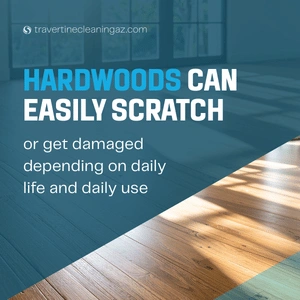
Hardwoods can easily scratch or get damaged depending on daily life and daily use. Over time the wood will start to look old and worn out.
Instead of ripping it out and putting in new expensive hardwood floors, you can easily sand the wood down to bare wood and re-stain to an original finish.
Yes, this would be a process and take some real muscle work but in the long run, doing it yourself or hiring a wood re-finisher would save you so much money versus getting all new wood floors.
Replacement vs Restoration Considerations
On all of these surfaces, you have to think about it. To replace, you have to get the old ripped out, the subfloor prepped, and then purchase the new flooring and get it installed.
Also, the amount of time it takes to remove, prep, and replace is how long most people need to stay off the floor. It is tough to live in a house that is having “renovations to the flooring.”
Before you decide to rip out your flooring and replace it with something new, give us a call to see how we can help you.
If you are still weighing the financial impact, our guide on travertine tile restoration costs in Arizona provides a clear breakdown of how much you can save compared to a full floor replacement.
When Tile Replacement Is Actually Necessary
Sometimes installing new tile, brand new tile, or full replacement is required — especially when structural failure, severe tile damage, widespread cracked tile, or major water damage has compromised the durability of the installation beyond safe repair.
However, these situations are less common than people expect. In most cases, targeted tile repair, correcting expansion joints, stabilizing the damaged area, and protecting the original tile can restore performance without tearing out the entire tile flooring system.
Damage caused by long-term daily wear and tear can sometimes affect not only the floor surface but also transition points where tile meets a wall or another material at one end of the room, which may impact the overall appearance of the space.
In these situations, a professional evaluation helps determine whether restoration can improve the appearance or if replacement is truly necessary.
Final Thoughts!
After nearly three decades working with tile flooring, natural stone, and grout systems, I can confidently say that understanding whether to repair or replace comes down to experience, proper evaluation, and knowing how materials behave over time.
Contact our team at 480-352-2987for more details and a free estimate on how we can help you with you decide.
If you want honest guidance before committing to demolition, reach out first — especially if you are trying to decide whether to replace or restore your tile flooring.
Frequently Asked Questions
Can damaged tiles be repaired instead of replaced?
Yes, many damaged tiles — including cracks, chips, or loose edges — can often be repaired using professional techniques like epoxy stabilization or targeted tile repair. In many cases, repair is faster and more cost-effective than full replacement.
When should tile be replaced instead of repaired?
Tile replacement is usually necessary when there is widespread structural damage, severe water damage, substrate failure, or large areas of broken tiles. If the damage is isolated, repair is often the better option.
Can you fix a chipped tile edge without replacing the whole floor?
Yes. Chipped edges, especially on natural stones like travertine or marble, are common. We can fill these chips using a specialized stone filler or epoxy that is tinted to match the exact color and texture of your tile. Once cured and honed flush with the surface, the repair is virtually invisible, saving you from the mess of ripping out the entire installation.
How do I know if I should repair or replace my tile flooring?
The decision depends on the extent of damage, the cause of the problem, and the condition of the underlying surface. A professional inspection can determine whether repair or replacement is the most practical solution.
Industry: Natural Stone, Tile and Grout Cleaning and Restoration
Cody has been in the Natural Stone, Tile and Grout service for 27 years, his knowledge and experience in this field helps get your job done correct the first time. If there is anyone you want on your job site it's Cody.