Best ways to clean and care for your travertine tile floors
Learn how to care and maintain your travertine flooring, making it look great for years to come.
If you’re looking for the best tips for cleaning travertine tile, you’ve come to the right place. Because travertine is one of the most beautiful natural stones you can put in your home, and it deserves to be treated right.
Whether you’re dealing with everyday dust and dirt on your travertine floors or tackling stubborn buildup in a travertine shower, the way you clean it makes all the difference. Travertine is a porous stone, which means it absorbs liquids, traps dirt, and reacts badly to the wrong products.
Get the cleaning process right, and your floors will look stunning for decades. Get it wrong, and you can do damage that's expensive to undo.
At AriStone Cleaning and Restoration, we’ve cleaned and restored travertine tile all across the Phoenix metro area — from Scottsdale to Chandler, Mesa to Gilbert. We’ve seen what works, what doesn't, and what Arizona homeowners do that unknowingly shortens the life of their stone.
Here are a few tips that our professionals here at AriStone Cleaning and Restoration recommend.
Tips for Cleaning Travertine Tile: Start With the Right Daily Routine
Travertine tiles are among the most popular tiles used in homes in Arizona. The beauty and versatility of the stone make for a truly beautiful statement. You can use travertine on virtually any surface, floors, countertops, showers, outdoor surfaces, and so much more.
Travertine makes a statement; it is also reasonably durable, and when maintained properly, it is relatively easy. Travertine floors in high-traffic areas take a beating every single day — sand, grit, and other particles act like sandpaper underfoot and will scratch the stone’s surface over time if they're not removed consistently.
Your daily and weekly routine should look like this:
Step 1: Dry Dust or Sweep First
Every session starts with removing loose debris. Use a soft-bristle broom or a microfiber dry mop. Microfiber is my preference. It picks up fine dust without scratching. Skip the stiff brooms. For outdoor pavers, a soft broom or a gentle rinse from a garden hose works fine before you start cleaning.
Step 2: Follow Up With a Microfiber Mop
After the dry pass, do a second pass with a microfiber mop — damp, not soaking. Squeeze the water out well. Too much water sitting on porous stone causes mineral staining, promotes mold growth, and can seep into the grout over time.
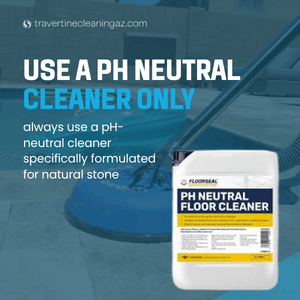
Step 3: Use a pH Neutral Cleaner Only
When you use a cleaning solution, stick to a pH-neutral cleaner made for natural stone. Mix it with warm water. Listen to me on this one:Never use vinegar, lemon juice, or standard household cleaners. I see this mistake all the time. Acidic cleaners etch the stone and cause permanent damage.
Step 4: Rinse With Clean Water
Go back over the floor with clean water after mopping. A cleaner left on the surface dulls the finish and attracts dirt faster. A rinse pass takes two minutes and makes a real difference.
Step 5: Dry Completely
Don't let travertine air dry if you can help it — especially in a travertine shower or in areas with hard water, as we have throughout Arizona. Hard water leaves mineral deposits and water spots that etch into the surface if left to sit.
Use a soft towel or a dry microfiber cloth to wipe the floor down and dry it completely after mopping. In a shower, get in the habit of running a soft cloth or squeegee over the tile after every use to manage moisture and prevent soap scum buildup.
How to Remove Surface Dirt and Handle Routine Cleaning Like a Pro
Even with daily sweeping, dirt builds up in the pores and grout lines. Grout acts like a sponge, trapping dirt and holding stains.
For your weekly clean, use a soft-bristle brush to agitate the grout lines. Use your diluted pH-neutral cleaner and scrub. Never use scrubbing pads or steel wool. They scratch travertine, and you’ll have to pay someone like me to hone the stone to fix it.
Apply your cleaner with a mop, let it sit for a few minutes to break down the dirt, scrub with a soft brush, and rinse with clean water. Work in small sections so the cleaner doesn't dry on the stone. Wipe up the excess water and let it dry before walking on it.
If you're trying to decide whether to tackle a deep scrub yourself or swap out your stone completely, read our full comparison on whether to replace or restore your tile flooring.
Cleaning Between Professional Cleanings
Now, we know you can't have a professional come clean every week. That would become expensive!! For long-term budget planning, you can check our comprehensive breakdown of travertine tile restoration costs in Arizona. In between professional cleanings, we recommend two options:
Use a steam mop. Buy a good quality steam mop with the microfiber heads and use that on an even daily basis. By using the high-heat steam, you are not only cleaning, but you are also sanitizing.
As for a cleaner, we recommend a low PH cleaner. Once we have completed work for you, we suggest Crystal Clean by Stone Pro. You can order this product on Amazon, and it comes premixed or in a concentrate for you. If you buy it premixed, make sure you have a push microfiber head mop.
We tell all our customers to avoid using the typical household products we all love because they are leaving a film on your floors, attracting dirt and dust, which, over time, can cause staining.
To protect your floors, avoid falling for common household cleaner traps and check out our look into alkaline vs acid-based cleaners to see what your pro uses.
Also, do not use acidic cleaners like vinegar or bleach. These types of products can cause damage to the travertine, especially if you have softer travertine.
Tackling Tougher Stains: What Actually Works on Travertine
Even with the best regular cleaning routine, stains happen. To prevent permanent damage, read our complete guide on how to identify things that stain travertine tile and how to remove them without making things worse.
For Organic Stains (food, drink, mold)
Mix a drop of dish soap with warm water. Apply it, let it sit, scrub with a soft brush, and rinse. For mold in showers or outdoor pavers, use diluted hydrogen peroxide. Apply, let it sit, and rinse. Always test a small corner first.
For Oil-Based Stains
Mix baking soda and water into a paste. Put it over the stain, cover it with plastic wrap, and leave it overnight. The baking soda pulls the oil out of the stone. Wipe it off and rinse with water.
Do Not Use Scrubbing Pads
It is inevitable that stains occur. The first thing we all think of is using scrubbing pads and chemicals to remove the stain. The problem with these materials on travertine is that they can scratch or etch the tiles, which cannot be removed without honing them out.
Don’t worry if you get a stain, and you can get it out on your own. By creating a small paste using baking soda and water, you can remove stains. All you have to do is apply the paste to the stone, let it sit for roughly 24 hours, and remove it with water.
You can do this multiple times if needed, but make sure you test this in an inconspicuous spot. If you do not know the softness of your stone, you don't want to try this in the middle and risk dulling your shine or etching a very noticeable spot.
For Water Spots and Mineral Deposits
Arizona's hard water leaves behind serious mineral deposits, especially in high-traffic areas and showers. For light water spots, a slightly damp soft cloth and gentle rubbing can remove surface deposits before they etch in.
For more stubborn buildup, use a pH-neutral stone cleaner formulated to address mineral deposits and scrub gently with a soft-bristle brush. Do not use acidic cleaners — even though it's tempting to reach for something that "cuts through" hard water deposits, acidic cleaners will permanently etch travertine. If the deposits are severe, this is when it's time to call in a professional.
For Tougher Stains That Won't Budge
Diluted isopropyl alcohol works for some discoloration. Apply, let sit, scrub, and rinse. If your grout is permanently stained, we can fix it with professional color sealing.
Again, test in an inconspicuous area first. If the stain is in the grout lines specifically and standard mopping no longer works, you can completely transform your lines with professional tile and grout color sealing.
A Warning on Scrub Pads: When a spill happens, the first instinct is to grab a scouring pad. Don’t do it. Abrasive pads etch the tile. Use the baking soda paste method instead. It takes 24 hours, but it won’t ruin your floor.
What NOT to Use on Travertine: Products That Damage Your Stone
Using the wrong product causes real damage. If a product doesn’t say "pH neutral and safe for natural stone," don't use it.
Never Use:
Vinegar or Citrus Cleaners: Acidic. They etch and dissolve the stone.
Bleach: Discolors grout and destroys the sealer.
Ammonia: Strips the sealer and dulls the finish.
Abrasive Pads/Steel Wool: Scratches the stone.
General Bathroom Cleaners: Contain acids and harsh chemicals.
Acidic Grout Cleaners: Etch the tile around the grout lines.
High-Pressure Steamers: Forces water into the stone and blasts out grout.
How to Clean a Travertine Shower
Showers are the toughest area to maintain. Daily moisture, soap scum, hard water, and temperature changes all hit at once. I've restored a lot of showers that looked like a total loss, and most of them got there from a combination of wrong products and skipped drying.
After every shower, squeegee or wipe the walls down. This one habit prevents most of the problems I see. For the weekly clean, spray with a diluted pH-neutral cleaner, let it sit, scrub the grout lines with a soft brush, rinse, and dry completely.
Don't use commercial tub-and-tile sprays, vinegar-based cleaners, or bathroom tile products. They're acidic. If your shower hasn't been sealed recently, unsealed stone absorbs everything, and stains become much harder to deal with once they're in the stone.
Get your shower professionally cleaned and sealed once a year.
Have your shower professionally cleaned and sealed every year for best results, and learn why this step is critical in our guide on the benefits of sealing my stone tile shower.
How To Clean Travertine Pavers Outdoors
Travertine pavers in an Arizona backyard face UV exposure, hard water from irrigation and pools, dust, and organic debris such as leaves and algae.
Here’s the right approach for cleaning travertine outdoors:
Start with a soft-bristle broom to remove loose dirt and surface debris. For a more thorough cleaning, use a garden hose on a gentle setting to wet the surface and rinse away dirt and debris.
Never use a high-pressure washer on travertine pavers — the force can damage the stone and blast out the grout.
For general cleaning, apply a pH-neutral stone cleaner diluted in warm water and scrub with a soft brush. Rinse thoroughly and let dry. For organic stains like algae or mold on outdoor pavers, a diluted hydrogen peroxide solution is safer than anything acidic. Apply, let sit for a few minutes, scrub gently, and rinse with clean water.
Outdoor travertine pavers in Arizona should be sealed regularly to protect against UV, water, and staining damage. We recommend a professional sealing service every 1–2 years for outdoor travertine — the Arizona sun and heat accelerate sealer breakdown faster than in most climates.
To understand the options for protecting your stone patio, look over our breakdown of modern outdoor paver sealers or check our deep-dive on choosing the best outdoor travertine sealer for desert environments. Learn more about our travertine paver cleaning and sealing service
Have Your Stone Sealed Regularly
We cannot stress having your travertine tiles and grout sealed regularly. The sealer we apply for you is a hybrid solvent-based penetrating sealer that absorbs into the stone and grout, clogs the pores, and acts as a barrier. This sealer will help prevent staining and discoloration.
When you have us apply the sealer for you, it comes with a 2-year warranty backed by us. As long as you follow the proper cleaning and maintenance plan, your sealer should last 2-4years, and for the first two years, we will touch it up for FREE if it is starting to break down anywhere.
Do not use topical sealers or waxes to protect your travertine. These are really bad for travertine. Over time, they will start to peel or wilt, and they will begin to look terrible.
The only way to remove these types of sealers is to strip them off, and that is a long, complex, and expensive project. So, do yourself a favor and make sure your professional cleaner never uses these types of sealers.
If your floor already has an old coating problem, read our guide on professional wax removal from travertine tile to see how we strip it clean.
When to Call a Professional for Your Travertine Cleaning
Even with perfect home maintenance, travertine benefits from a professional deep clean every 12–18 months, especially in high-traffic areas. According to the IICRC (Institute of Inspection, Cleaning and Restoration Certification), professional stone cleaning significantly extends the life of natural stone surfaces and addresses deep-set soil and buildup that regular cleaning can't reach.
Here are the signs it's time to call us:
Your floor looks dull after mopping.
Your grout lines are black.
You see scratches or dull etch marks.
Stains won't come out.
It’s been over 2 years since your last seal.
Having a professional service provided
Over time, regular wear and tear will take effect on your travertine tiles. This is 100% normal for any type of flooring. Having a professional come in and clean, seal, and do some restoration will help prolong the life and integrity of your travertine floors.
We highly suggest not trying to hone or polish your travertine on your own. These are processes that can, if not done correctly, ruin your travertine tiles to the point of no comeback. We are highly trained and know the ins and outs of travertine. We can also assess a stone flooring and let you know the shine precisely we will be able to achieve or not achieve.
There are many different types of travertine out there that can be used in many different areas. You have tumbled, polished, honed pavers, and so much more. Check out our guide on grades and types of travertine tile to figure out exactly what is installed in your home.
Unfortunately, not all of these travertine grades can achieve the highest polish or match the clarity of the others.
As professionals, we can advise you in the right direction, and we never tell you we can provide a sheen we know we cannot achieve on your stone.
We recommend having your travertine tiles cleaned and sealed by a professional every 12-18 months. Our cleaning process is extremely thorough and will provide the best possible clean. We use high-pressure systems to blast the dirt and grime out and off of the tiles and out of the grout lines.
When it comes to honing and polishing, we use specific pads, powders, and machines to ensure your travertine floors' safety and the highest quality of work. Call us for more information anytime at 480-352-2987.
Frequently Asked Questions
Can I use vinegar to clean travertine tile?
No. Vinegar is acid. It will etch and ruin your travertine. Use a pH-neutral stone cleaner.
How often should I clean travertine floors?
Dry dust or sweep daily in high traffic areas. Do a damp mop with a stone cleaner weekly. Schedule a professional deep clean and reseal every 12–18 months.
What’s the best cleaner for travertine?
A pH-neutral stone cleaner — such as Crystal Clean by Stone Pro — is the best option for regular home cleaning. Avoid any product not labeled safe for natural stone.
How do I remove stains from travertine?
For oil, use a baking soda and water paste overnight. For organic stains, use diluted dish soap or hydrogen peroxide. For water spots, use a pH-neutral mineral cleaner. Test a small spot first and rinse with water.
Industry: Natural Stone, Tile and Grout Cleaning and Restoration
Cody has been in the Natural Stone, Tile and Grout service for 27 years, his knowledge and experience in this field helps get your job done correct the first time. If there is anyone you want on your job site it's Cody.