As homeowners, we are always doing upkeep around the house, whether it is daily cleaning, large renovations, or just trying to cross off a task on our never-ending honey-do list. Today we are going to talk about some do and don’ts regarding travertine. We’ll discuss what etching and staining are and how it occurs, the importance of sealing, why you polish travertine, and some simple tips for your regular cleanings to your floors between having it professionally cleaning serviced.
As homeowners, we are always doing upkeep around the house, whether it is daily cleaning, large renovations, or just trying to cross off a task on our never-ending honey-do list. Today we are going to talk about some dos and don’ts regarding travertine.
We’ll discuss what etching and staining are and how they occur, the importance of sealing, why you polish travertine, and some simple tips for the regular cleanings of your floors between having it professionally cleaned.
Etching and Staining: what it is and why it happens
Natural stone is unique in the appearance it provides and the beauty it bestows, a huge reason the stone flooring has been around for ages. Even though stone, such as travertine tile floors, has been used for a very long time, it does not necessarily mean they are indestructible.
There are many types of stone, but right now, we’ll focus on travertine floor tiles.
Dirt, grease, and grime are everyday occurrences on the stone surface. However, staining and etch marks are not.
Etch marks and stains will give the illusion that the surface of your stone has a build-up of dirt, so you tend to it with regular cleaning, but it will not disappear.
That is because some substance has penetrated the surface and absorbed into the stone itself.
For example, a red wine spill, no matter how many times that area is cleaned, an outline or what looks to be a watermark never gets removed, and the stone surface seems to have a pink tinge.
Travertine is soft and porous, and something as acidic as red wine can damage the surface of your stone. Etch marks will be the outline of the spill or “the ring” that is always visible.
Etching can be removed by processes such as honing or polishing.
Some staining can also be removed by honing or professional cleanings, depending on the severity. You can’t always remove stains, but there are some preventative measures you can take.
Sealing your floors is the easiest and most cost-effective way to prevent staining and etch marks.
Travertine sealing and why it is important
Property sealed floors are the best at withstanding stains and etch marks. Sealing the travertine helps lessen and prevent stains and etch marks.
Travertine that is sealed not only cleans easier but maintains a polished or honed finish over a more extended period.
Our sealer is specially formulated with nanotechnology to help clog and shrink the pores of the stone to prevent and limit any absorption of staining or moisture.
The sealing of travertine has many benefits, makes clean up easier, absorption of moisture and stains are limited, and acts as a barrier for everyday life, giving you peace of mind.
Properly sealed floors can withstand a lot of your day-to-day operations, like kids spilling juice, dog slobber, or a night of having one too many.
Everyone knows to clean their floors, but not everyone thinks to seal them or overlooks sealing them. Sealing the stone will cut down and prolong the future need for any restoration process. The most common steps in that process are to hone or polish.
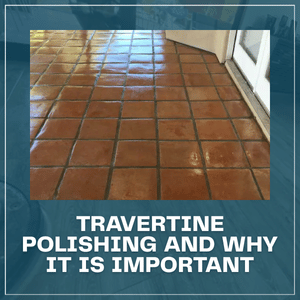
Travertine Polishing and why it is important
Travertine is a soft stone and will continue to soften over time, just with regular household cleanings and normal wear and tear.
The surface of travertine is what becomes soft, and when sealed, it is protected and slows down the process.
Don’t worry too much because a polishing process can increase the density of the surface.
The acid in the polish will react with the calcium in the travertine, and by using a floor machine, it adds friction with the speed and the weight of the machine.
All of this combines to heat up the surface of the stone and increase its density.
By increasing the density, it will also provide a natural shine or polished look that will last.
Natural shines are provided during a polishing process with creams or powders, not a wax or high gloss sealer.
More dense travertine will also clean better and withstand more.
Do's and Don'ts when cleaning your travertine tile between professional cleanings
There is a lot of uncertainty when maintaining your travertine surface between professional services, so let’s go over some do’s and don’ts.
When mopping, it is easy to grab any popular cleaning product of the shelf, throw it in your bucket, and start cleaning your travertine.
However, a lot of mopping solutions are too high in their PH levels, which can cause issues.
Using a high alkaline solution will break down sealers quickly, soften the stone, dull the surface, leave a residue or film to attract more dirt, or dull down the surface to lose that polished finish.
When cleaning your floors, it’s best to remove any debris that may be there.
It’s as simple as using a dust mop, something soft to use on the stone yet effective at removing debris without scratching the stone.
Steam mops with plain water are always a great and safe option.
The steam will sanitize without harming the stone or sealer, leaving no residues behind or using an abundance of moisture.
Any pH-balanced or pH-neutral stone cleaners will work as well as long as the moisture is minimized.
Hopefully, this helps to inform and educate on the steps needed to maintain and preserve your travertine.
Please make sure to stay on top of your professional stone cleanings and always get your travertine properly sealed so that you can enjoy the stone for all it has to offer.
Daily Cleaning Tips for Travertine Surfaces
Maintaining the natural beauty of your travertine surfaces starts with simple daily cleaning habits. Using a soft cloth or a soft bristle broom to sweep the entire surface removes loose dirt and debris without scratching the stone.
For spills, use a cleaning solution specifically designed for clean travertine tile and warm water, avoiding harsh acidic cleaners that can etch the stone. It’s always best to clean up spills immediately to prevent staining or etching on the stone.
Regular care helps prevent buildup in grout lines and keeps your beautiful stone looking polished. Using a mild soap diluted in warm water can safely clean high-traffic areas without damaging the stone.
In areas with heavy foot traffic, a dry mop is effective for removing dirt and grit before it scratches the surface.
For travertine showers and high-moisture areas, prompt cleaning reduces the risk of soap scum or mineral deposits from developing, preserving the stone’s aged and weathered appearance and maintaining a high gloss surface.
Pay extra attention to the affected area if a spill or stain occurs, as travertine is soft and porous and can absorb liquids quickly.
Deep Cleaning and Professional Maintenance
While daily care is essential, periodic deep cleaning ensures your travertine stone stays vibrant and healthy. Professional services can clean honed travertine, travertine pavers, or marble flooring using specialized stone cleaners and techniques that reach the pores of the stone without causing damage.
This level of care protects the stone vulnerable areas and restores the natural beauty that can dull over time.
Cleaning travertine professionally also addresses tough spots in grout lines and removes embedded dirt that simple mopping cannot reach, leaving the entire surface clean and ready for sealing travertine.
Proper travertine maintenance goes beyond cleaning—it includes grout sealing and applying the correct protective treatments to travertine tile and travertine stone.
Sealing reduces absorption, prevents staining, and preserves the weathered appearance of aged stone. For travertine showers or outdoor travertine pavers, sealing protects the surface from moisture, mineral buildup, and daily wear.
Between professional services, using warm water and a soft cloth, or a pH-balanced cleaning solution, ensures the stone stays pristine. Regular care keeps your beautiful stone looking fresh and maintains the integrity of your floors, countertops, or patios.
Stone care at its finest, this travertine tile flooring was very broken down and we came in and cleaned it, polished it and seal it to keep it looking great for years to come.
Tumble travertine can take on alot of dirt and staining because of it edges and wider grout lines, we can professionally clean your tumble travertine just like this one
Industry: Natural Stone, Tile and Grout Cleaning and Restoration
Cody has been in the Natural Stone, Tile and Grout service for 27 years, his knowledge and experience in this field helps get your job done correct the first time. If there is anyone you want on your job site it's Cody.